I have been talking about exactly this with a friend yesterday.
We were discussing how dangerous space radiation really is. Consider you want to live on Mars. There’s about 12 Sievert (Sv) of radiation that you would be exposed to through your lifetime if you lived in a habitat with absolutely no shielding, about 0.41 mSv/day average (Source).
Wikipedia says that a 1 Sv dose is linked to a 5.5% chance to eventually develop fatal cancer (Source). Based on that, 12 Sv would give you a 50% chance of developing cancer throughout your life. (1 - 0.055)12 = 0,507…
But is this really a meaningful way of looking at things? I guess there’s ways that life could become much more radiation-hardened, if we only knew how. And fungus like the one in the article are to make us understand how.
On mars, initial habitation would be underground/in canyons to shield from the radiation. Similar plans for the moon.
Of course excavating sub-surface dwellings on another celestial body is currently about as technically feasible as time travel, but that’s the heart of the most realistic plans for long-term habitation.
read good things about lava tunnels on the moon. not as much on mars. must be caves somewhere. would take many generations for natural selection to give us better skin. if we survive. ocean voyages were a big gamble.
You have the largest canyon in the solar system, if you live there you get pretty dense atmosphere, compared to the surface, and lateral earth shielding, and you’re also next to the largest mountain in the solar system.


I have been talking about exactly this with a friend yesterday.
We were discussing how dangerous space radiation really is. Consider you want to live on Mars. There’s about 12 Sievert (Sv) of radiation that you would be exposed to through your lifetime if you lived in a habitat with absolutely no shielding, about 0.41 mSv/day average (Source).
Wikipedia says that a 1 Sv dose is linked to a 5.5% chance to eventually develop fatal cancer (Source). Based on that, 12 Sv would give you a 50% chance of developing cancer throughout your life. (1 - 0.055)12 = 0,507…
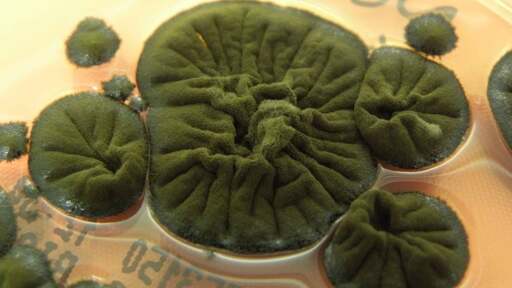
But is this really a meaningful way of looking at things? I guess there’s ways that life could become much more radiation-hardened, if we only knew how. And fungus like the one in the article are to make us understand how.
On mars, initial habitation would be underground/in canyons to shield from the radiation. Similar plans for the moon.
Of course excavating sub-surface dwellings on another celestial body is currently about as technically feasible as time travel, but that’s the heart of the most realistic plans for long-term habitation.
read good things about lava tunnels on the moon. not as much on mars. must be caves somewhere. would take many generations for natural selection to give us better skin. if we survive. ocean voyages were a big gamble.
You have the largest canyon in the solar system, if you live there you get pretty dense atmosphere, compared to the surface, and lateral earth shielding, and you’re also next to the largest mountain in the solar system.