

3·
2 days agoCan confirm. I’m still rocking a 1070 Ti on a 1440 monitor and it more than meets my needs, granted I’m playing somewhat older AAA games. Looks like a 4060 is even better.
Can confirm. I’m still rocking a 1070 Ti on a 1440 monitor and it more than meets my needs, granted I’m playing somewhat older AAA games. Looks like a 4060 is even better.
Build a Voron!
Dig through my comment history and you’ll see pros and cons of choosing to do so. If you like building and modding it’s hard to beat. The build is pretty long, but you’ll learn a lot.
It’s a 19 minute / 2.4 mile trip. But your point still stands - you’re not covering wear and tear.
You’re going to have a hard time beating $2/mo unless you roll it into something else like blackblaze ($100/year for unlimited storage), Microsoft office 365 ($100/year with 1 TB of OneDrive), etc. If your space is going to photos, the speed and responsiveness of Google photos far outpaces some of the alternatives (cough cough OneDrive).
Self hosting is a viable alternative if you’re interested in having more control/local storage or if you are interested in this kind of thing and want to do it/dabble in it as a hobby.
I personally built a NAS, which will take far too long to amortize vs just paying $2/mo. I chose this route because I value a local backup and because a NAS can a bit of a lifestyle product. “It can double as a server!”. Sounds fun, but I would want to build the thing I host which will also take time so… You could potentially build a NAS that will average out to $2 or less a month if you have spare parts or score some used parts cheap. Odds are that route could also be used for self hosting.
How big? Potentially huge if you can get people to abandon car ownership by having a super convenient offering. Owning/leasing/maintaining a car is already expensive. We seem to be running at a situation where lower priced new cars become the thing of the past.
Not likely under Trump sadly
it’s not that unusual for regular skilled jobs to achieve 6-figure yearly salaries.
This is a… very messy and complicated area to talk about and there are plenty of stats and data setsyou can cherry pick to make things sound better than they are. Consider things like median vs average, whether or not you excluded retired folks, etc.
This graphic is a decent toe in the water:

I can’t speak for other printers, but my X-Max 3 has an absurdly thick aluminum plate
The stock 350mm Voron bed is 5/16" (8mm) thick. It’s quite hefty lol
What OP meant was volumetric flow, not the extrusion multiplier. Volumetric flow caps the volume of plastic the slicer will ask your extruder to deliver per second. Fiddling with this value can help prevent under extrusion.
What you did by reducing speed is similar, but you could run into issues if you were to modify extrusion width or layer height.
Apologies for the delayed reply, it’s been a week.
Vorons are capable because the base design is pretty good out of the box and because the design is open source. As other companies come up with cool ideas you’ll usually see a mod to adopt them to a Voron. It wouldn’t surprise me if this idea is adopted. Until very recently, things like hot ends were commodity parts made by third parties and not the printer OEMs. This made part availability fairly guaranteed and also feels more open. The good news is that it looks like Bambu will sell these parts at some point.
As for existing options in Voron land, there three popular mods out there for multi-toolhead: StealthChanger, TapChanger, and Mad Max.

I recently had a drive fail in my 4 bay nas. Amusingly, synology branded drives seem like they’re pretty close to p ice parity with OE drives these days.
Solid natural wood is a horrible material for loudspeaker cabinets. Granted, this fact isn’t limited to just speakers. Wood expands and contracts with humidity, which means making boxes of any type out of solid wood complicated. Cabinet doors have floating panels in the center for exactly this reason. That’s why you should use breadboard ends if you want to frame a wood table, otherwise your table will risk warping and cracking. There’s also the whole non-uniform density thing. Most loudspeakers use something like MDF as a substrate and will veneer the outside. MDF is both stable and uniformly dense, which makes achieving a “dead” (or non-resonate) enclosure a lot easier.
It’s normal
This is disappointing. Not because it’s normal, but because so many photos of prints you see on the web extolling print quality are in ideal lighting. It’s misleading at best. I will say surface quality is oodles ahead of my old I3 clone, but this has always miffed me.
I think it’s more visible the thicker your layers are
I do tend to print in chunkier layers. Also thicker extrusions and nozzles…
If you’re printing with ASA, perhaps you could use some light acetone smoothing
It doesn’t really bother me as my prints are functional, but there’s always been this nagging thing in the back of my head regarding surface quality relative to what folks on the internet present they achieve. The photo in this post is guilty of this TBH. The print looks way worse on the bed thanks to a taller printer with top mounted lights resulting in a steep lighting angle relative to vertical surfaces. It’s like going on a picturesque trip only to find out that all the photos you’ve seen online take a lot of liberty with timing (ie super early/late in the day) and/or framing.
Eh. The days of DIY printers both costing less and out performing are a thing of the past. I would argue that Vorons are more capable than say a Baubu, but I digress.
2.4 R2 owner chiming in. I built mine about 3 years ago after window shopping for a year.
Why Voron in 2026?
Why not Voron?
Edit: final thought. IMO I do not find myself wanting for “tech” and there’s really not much missing from a Voron out of the gate. Nearly anything a Bambu can do is easily adopted to a Voron if you want to.
Self designed very specific objects are where it’s at regarding 3D Printing IMO. Once you get into the habit of realizing that you can print a part for <x> you’ll find yourself doing it again and again.
Examples I’ve designed and printed include:
You also find yourself being more adventurous with modifying other things knowing you can print interface parts. For example, our outdoor table had a 1.5" hole for umbrellas. We wanted a larger umbrella, which requires a bigger hole, so I cut a portion of the metal center of the table out and made a plastic adapter. I’ve also done lampshades and a bunch of other odds/ends around the house.
lol, I see. Printer tuning is a very real struggle for some and it happens that tree supports are one of the things that you can run into.
In my experience, broken tree branches come from:
Obviously, these can all be a bit interrelated.
The support in this print is basically vertical (no crazy angles), I generally have great bed adhesion/my printer can mechanically make its gantry in plane with the bed/I run a bed mesh every print/I use klipper_z_calibration to get a consistent first layer, nothing’s warping and I’ve tuned my extrusion multiplier for this spool of filament, the support itself is strong due to its girth at the base and wall thickness, and CoreXY means that the support doesn’t really move unless the extruder is dragging some.
I agree. In fact, that’s what I tend to do - slice up a design by splitting the body/bodies and printing test pieces where tolerances matter. Things like latches, hinges, pieces that have to fit with one another, etc. I’m not sure how practical this approach would have been for this print due to its final orientation, but it’s a really good practice.
I think I got a bit too comfortable with things going per plan over my last batch of designs :( I’ll also admit to being in a bit of a time crunch. No deadline, but I have younger kids so time to model and print is somewhat limited. This is a good reminder that rushing can actually make things take longer in the end.
Massaging this print to fit wasn’t practical. Despite being off by 1% that’s still 2mm of material to remove over some pretty big spans. I did take a chisel to the cutout, but man is ASA tough. PETG is much easier to do that with lol.
Thanks re: print looks great. It’s super solid, so I’m very happy in that regard. I don’t know about you, but lighting greatly impacts how the surface quality of my prints look. Hard/direct light at a steep vertical angle makes the faces look pretty rough, but more diffuse light coming from the side makes the parts look great. I am not sure if this is normal, especially for a larger CoreXY with long 6mm wide a/b belts, or if this is something I can dig into and improve.


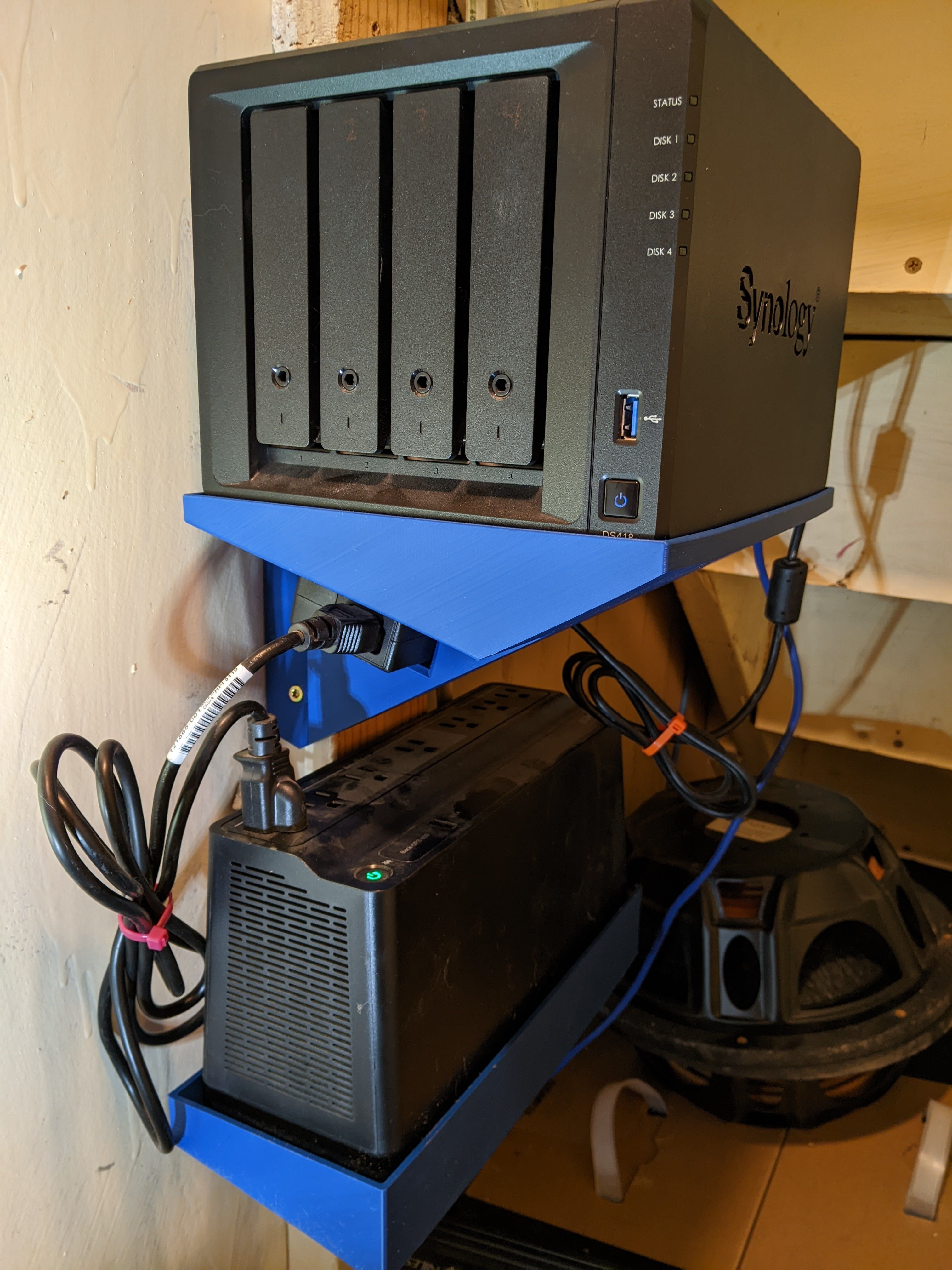
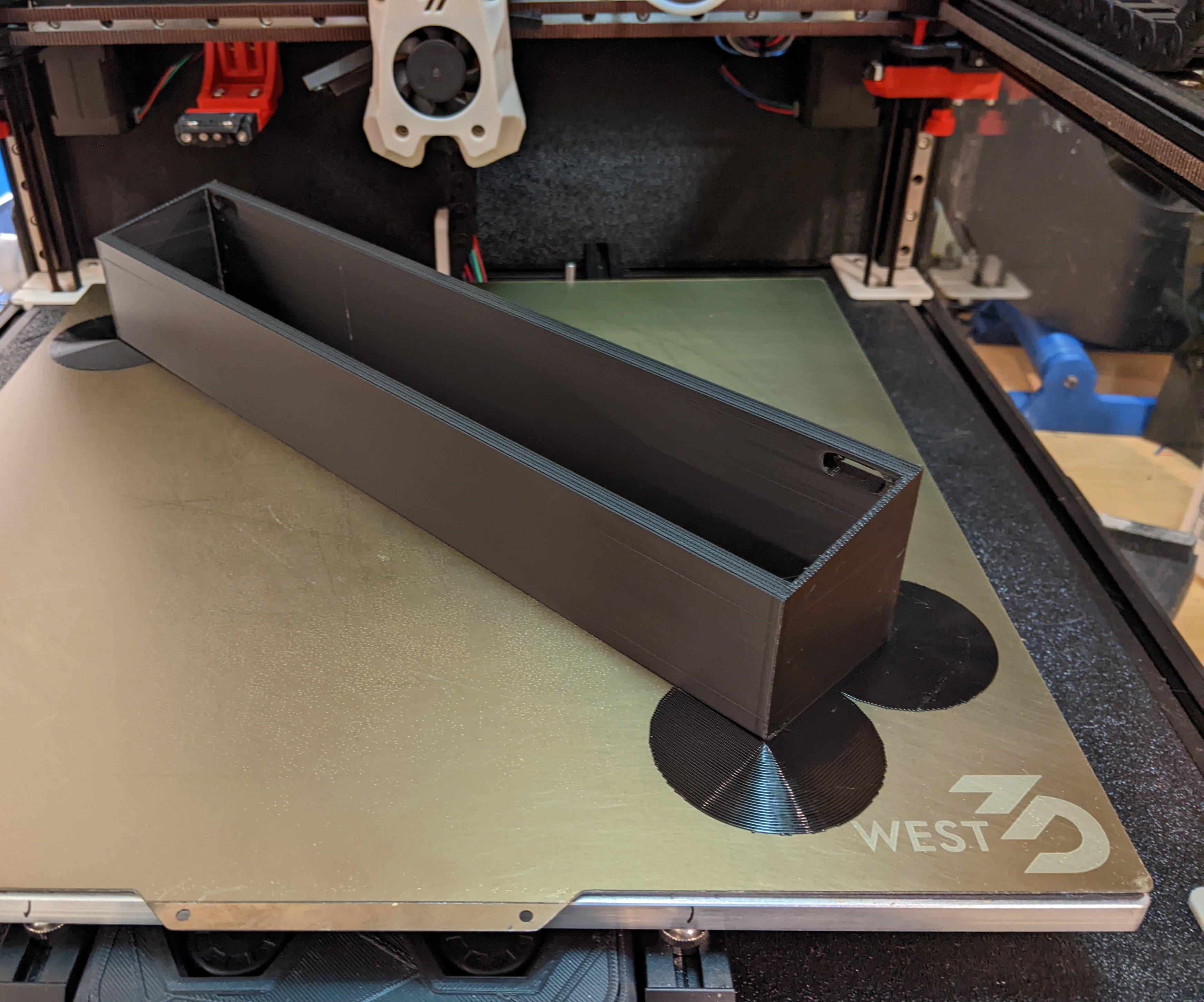

I totally get printing and/or sourcing parts as another barrier on entry. I was able to print my own parts with my wanhao i3 plus under a very large cardboard box. Vorons are popular enough that you can buy pre-printed and/or CNC parts now, but their print it forward program has been around for years. But all of those come with some form of cost.