
djdarren
- 0 Posts
- 54 Comments
 8·2 days ago
Funny enough, I installed Win11 on a friend’s HP convertible laptop today.
A 2GHz i3 and 4GB RAM, and it was still entirely usable. Not powerful by any means, but a fine socials browser, YouTube viewer, and document writer.
I’d have preferred to put Debian on it, but it wasn’t my call, so I did as requested.
 5·10 days ago
/me moves to NYC.
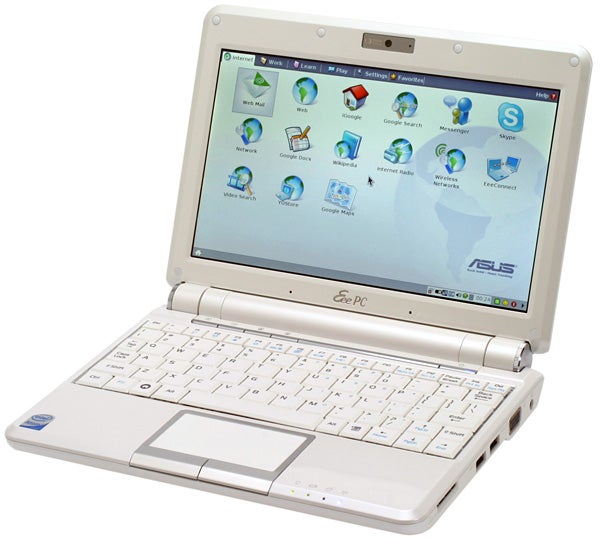
Eh, I gather the Linux based ones were actually pretty cool. But 99% of netbooks ended up being underpowered mini laptops running XP, so were doomed to failure.
I’ve got Monzo working with my Garmin. I use Graphene, so it’s literally my only option for payments considering Curve failed my ID check and refuse to reply to my emails trying to sort it out.

What, like Asus did back in 2007?
Of all the PC manufacturers, Apple are the ones who are most likely to sweep away legacy standards.
Remember when they ditched DVD drives altogether, and the tech world threw a shit fit. When was the last time you saw a new laptop with a disc drive?
They did the same with the 30 pin connector. USB-A as well.
Of course, they can get away with it because they can also dictate which machines get which OS updates, so can entirely block devices that don’t have hardware they no longer want to support.
Thing is, from Apple’s perspective they don’t really need users to plug anything in to a MacBook - particularly where this one is concerned.
MacBook Neo exists as an entry-level device to hook new computer users into their services. You don’t need an external hard drive, because for just £5 a month you can access iCloud Storage. You don’t need to connect a music player, because for just £15 a month you can have Apple Music. You don’t need to sync a Kobo, because you can read Apple Books on your iPad or iPhone. And so on.
They made the same argument with the 2015 MacBook. It only had one USB-C as a nod to the fact that it needed to be charged somehow.
Personally I don’t like that view, but I’m not the target for this laptop.
For a teenager whose primary use case is to complete their school work on this, that’s entirely valid. And for the employee who’s issued a low-cost computer so they can work from home.
If the user needs more/better IO, then they can spend more to get more. But why equip an entry-level computer with four Thunderbolt 5 ports that will never be used? And why go to the trouble and expense of retrofitting an A18 SOC to provide those TB ports?
 2·23 days ago
I have my dad’s old 8gb M1 mini at home, being used as my Home Assistant machine. 4Gb of the RAM is allocated to UTM for running HAOS, while the other 4Gb is for macOS (Tahoe, annoyingly) to do with as it pleases, including running a modest LLM in Ollama so I can use speech commands. It works perfectly well.
The same setup under Asahi kept falling over, because only macOS seems to get access to a bunch of the shit that it needs to (presumably) swap memory to the SSD.
So yeah, I wouldn’t be at all worried about 8Gb in the Neo. Not for its intended market, anyway.
That said, say a kid gets one to use at school, after a couple of years they’re going to want to upgrade to something with more RAM, which is kinda what Apple are betting on, so they can sell more units. But yeah, as an entry level laptop, this Neo looks like a decent bet.
It’s like you don’t care about stonks and shareholder value.
I have a script that takes a YT URL on my clipboard and uses yt-dlp to download it to my Jellyfin folder so I can watch on my Apple TV on The Big Telly.
Fuck adverts.
I actually have no idea how it all works. It just does.
Asahi is incredible for general use computing on M1/2 machines, and perhaps even in use as a general purpose home server. But it’s still very much a fun exercise in what might be possible rather than a solid option, in my opinion.
I have an 8GB M1 mini in service as my Home Assistant server. 4GB to UTM to run HAOS, the rest for macOS and Ollama running a small LLM for speech to text. I’m genuinely amazed that it hasn’t fallen over. Tried the same thing in Asahi but without macOS’ memory management and access to GPU acceleration, it just wasn’t feasible.
I last tried out the beta version of it on Graphene a couple of months back and it was rough. In fairness though, I was mostly using it to figure out how to use it to install a full fat Linux distro, which is probably a niche use.
My phone’s just updated, so I’ll give it another spin when I get home tonight and report back.
The performance with regards to Home Assistant is spot on.
I have an M1 mini with 8Gb of RAM that I use as my Home Assistant server. I’ve given 4Gb to HAOS running in UTM, and let Ollama use the rest to run a modest LLM for speech to text. It’s flawless.
I’m not suggesting that 8Gb is the gold standard or anything, but for some applications it’s still perfectly usable.
I have an M2 Air with 16Gb, and for what I need it to do, I couldn’t have any less, but the target market for a bargain basement entry level MacBook almost certainly won’t ever notice. It’ll literally just be a portal to access iCloud and whatever browser they use to get on their socials. And if they do find they need more, then Apple will happily sell them a new laptop.
Don’t get me wrong, I think Apple’s approach to RAM pricing has been criminal for years, and as a company they’re really figuring out how to plumb the depths of scumminess, but on this I don’t really see the issue.
With that said, the cost of an extra 8Gb to them is literally pennies, so withholding it is shitty. But it won’t really make that much difference to the average performance of the computer.
Those things have held their value well, largely because of the RAM. Idly pondered grabbing one when the M1 came along, but the price was still strong. Dunno what they’re like now, mind. I’d be tempted as a replacement for my 2014, but honestly, it still works just fine considering it’s only got 8GB RAM.
I find myself at a point where I don’t actually want any new computing devices, partly because of this, and partly because, well, what I have works fine for me.
I have an M2 MacBook Air that is still as solid as the day I got it (Sequoia for life) for the majority of my personal needs, plus a 2014 Mac mini running Mint as my home server, an M1 Mac Mini my dad gave me that runs my Home Assistant, and an old(er) PC that has a GTX 1060 GPU that’s capable of playing most of the games I care to play. My phone is a Pixel 9 running Graphene which is a year old and nowhere needing a replacement, and I have an iPad mini that I barely use these days anyway.
I guess I’m lucky enough that my shit is new enough that it’s still usable, and my use-case is light enough on resources that the older gear still works perfectly well for what I need.
My wife, however, needs a new PC…
This Noodle video on how old games were developed with CRT in mind was absolutely mind-blowing to me.
When using Sunshine/Moonlight to stream games to our Apple TV, you can guarantee that if it begins to stutter it’s because Windows is downloading something in the background.