• 0 Posts
  • 35 Comments
Joined 7 months ago
cake
Cake day: September 14th, 2025

help-circle
  • The tech could represent the end of visual fact — the idea that video could serve as an objective record of reality — as we know it.

    We already declared that with the advent of photoshop.

    I think that this is “video” as in “moving images”. Photoshop isn’t a fantastic tool for fabricating video (though, given enough time and expense, I suppose that it’d be theoretically possible to do it, frame-by-frame). In the past, the limitations of software have made it much harder to doctor up — not impossible, as Hollywood creates imaginary worlds, but much harder, more expensive, and requiring more expertise — to falsify a video of someone than a single still image of them.

    I don’t think that this is the “end of truth”. There was a world before photography and audio recordings. We had ways of dealing with that. Like, we’d have reputable organizations whose role it was to send someone to various events to attest to them, and place their reputation at stake. We can, if need be, return to that.

    And it may very well be that we can create new forms of recording that are more-difficult to falsify. A while back, to help deal with widespread printing technology making counterfeiting easier, we rolled out holographic images, for example.

    I can imagine an Internet-connected camera — as on a cell phone — that sends a hash of the image to a trusted server and obtains a timestamped, cryptographic signature. That doesn’t stop before-the-fact forgeries, but it does deal with things that are fabricated after-the-fact, stuff like this:

    https://en.wikipedia.org/wiki/Tourist_guy


  • tal@olio.cafetoTechnology@lemmy.worldThe Web is Going to Die
    link
    fedilink
    English
    arrow-up
    1
    ·
    6 months ago

    That depends on how you define the web

    Wikipedia:

    https://en.wikipedia.org/wiki/Gopher_(protocol)

    The Gopher protocol (/ˈɡoʊfər/ ⓘ) is a communication protocol designed for distributing, searching, and retrieving documents in Internet Protocol networks. The design of the Gopher protocol and user interface is menu-driven, and presented an alternative to the World Wide Web in its early stages, but ultimately fell into disfavor, yielding to Hypertext Transfer Protocol (HTTP). The Gopher ecosystem is often regarded as the effective predecessor of the World Wide Web.[1]

    gopher.floodgap.com is one of the last running Gopher servers, was the one that I usually used as a starting point when firing up a gopher client. It has a Web gateway up:

    https://gopher.floodgap.com/gopher/

    Gopher is a well-known information access protocol that predates the World Wide Web, developed at the University of Minnesota during the early 1990s. What is Gopher? (Gopher-hosted, via the Public Proxy)

    This proxy is for Gopher resources only – using it to access websites won’t work and is logged!


  • tal@olio.cafetoTechnology@lemmy.worldThe Web is Going to Die
    link
    fedilink
    English
    arrow-up
    9
    ·
    edit-2
    6 months ago

    How many of you out there are browsing the web using Gofer?

    Gopher predated the Web.

    I do agree that there have been pretty major changes in the way websites worked, though. I’m not hand-coding pages using a very light, Markdown-like syntax with <em></em>, <a href=""></a>, and <h1></h1> anymore, for example.


  • I don’t see why it would need to be affected.

    The constraint to require a valid signing isn’t something imposed by the license on the Android code. If you want to distribute a version of Android that doesn’t check for a registered signature, that should work fine.

    I mean, the Graphene guys could impose that constraint. But they don’t have to do so.

    I think that there’s a larger issue of practicality, though. Stuff like F-Droid works in part because you don’t need to install an alternative firmware on your phone — it’s not hard to install an alternate app store with the stock firmware. If suddenly using a package from a developer that isn’t registered with Google requires installing an alternate firmware, that’s going to severely limit the potential userbase for that package.

    Even if you can handle installing the alternate firmware, a lot of developers probably just aren’t going to bother trying to develop software without being registered.


  • You can get inkjet printers that don’t have restrictions on the ink. They cost more, though.

    The reason printer manufacturers are so hell-bent on being a pain in the ass with the ink is because they’re using a razor-and-blades model. They’re selling you the printer at a lower price than they really should, if their price reflected their costs, with the expectation that they’ll make their money back when you buy ink at a higher price than you really should, because people pay more attention to the the initial price of the printer than to the consumable costs.

    Same way you can get unlocked cell phones instead of network-locked cell phones with a plan. Gaming PCs instead of consoles. It’s not that they’re unavailable, but you’re gonna have to accept a higher up-front cost, because you’re not getting a subsidy from the manufacturer.

    Canon sells a line of inkjet printers that just take ink from a bottle. No hassles with restrictions on ink supply there. The ink is cheap, and there are third-party options that are even cheaper readily available…but you’re going to pay full price for the printer.

    https://www.usa.canon.com/shop/printers/megatank-printers

    Their lowest-end “MegaTank” printer is $230:

    https://www.usa.canon.com/shop/p/megatank-pixma-g3290

    A pack of third-party ink refill bottles is $15, and will print (using Canon’s metrics), about 7,700 color pages and 9,000 black-and-white pages:

    https://www.amazon.com/Refill-Compatible-Bottles-MegaTank-4-Pack/dp/B0DSPSS5W7

    Compatible GI-21 Black Ink Bottle Up to 9,000 pages, GI-21 Cyan/Magenta/Yellow Ink Bottles Up to 7,700 pages

    On the other hand, Canon’s lowest-end “cartridge” printer, where they use the razor-and-blades model, is $55.

    https://www.usa.canon.com/shop/p/pixma-ts3720-wireless-home-all-in-one-printer

    But you rapidly pay for it with the ink; It looks like they presently sell a set of replacement cartridges for $91. And that set will print a tiny fraction of the number of pages that the above ink bottles will print.

    page yield of 400 Black / 400 Color pages per ink cartridge set and cost of $90.99 for a value pack of PG-285(XL) and CL-286(XL) ink cartridges (using Canon Online Store prices as of June 2025).

    So if you really do want to do photo prints with an inkjet without dealing with all the DRM-on-ink stuff, you can do it today. But…you’re going to pay more for the printer.

    All that being said, I do think that lasers are awfully nice in that you don’t need to deal with nozzles clogging. You can leave a laser printer for years and it’ll just work when you start it up. If you don’t need photo output, just less hassle.


  • tal@olio.cafetoTechnology@lemmy.world60hz Displays are a slideshow
    link
    fedilink
    English
    arrow-up
    3
    ·
    edit-2
    6 months ago

    I’m the other way. I’d rather have battery life on cell phones, and turn the refresh rate down.

    On a desktop, where the power usage is basically irrelevant, then sure, I’ll crank the refresh rate way up. One of the most-immediately-noticeable things is the mouse pointer, and that doesn’t exist on touch interfaces.


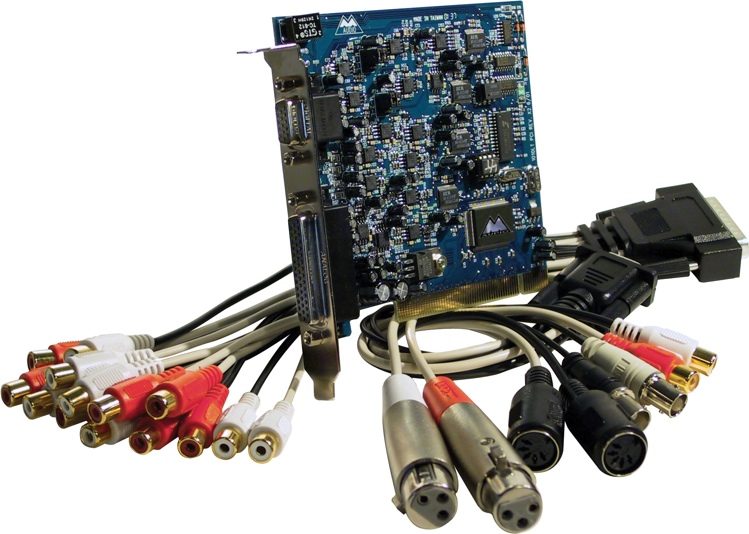
  • I have a feeling its mostly due to some audio and video hardware that has some real longevity. I’ve got a VHS+minidv player that I am transferring old videos from using FireWire (well, for the minidv. VHS is s-video capture).

    Yeah, that’s a thought…though honestly, unless whatever someone is doing requires real-time processing and adding latency is a problem, they can probably pass it through some other old device that can speak both Firewire and something else.

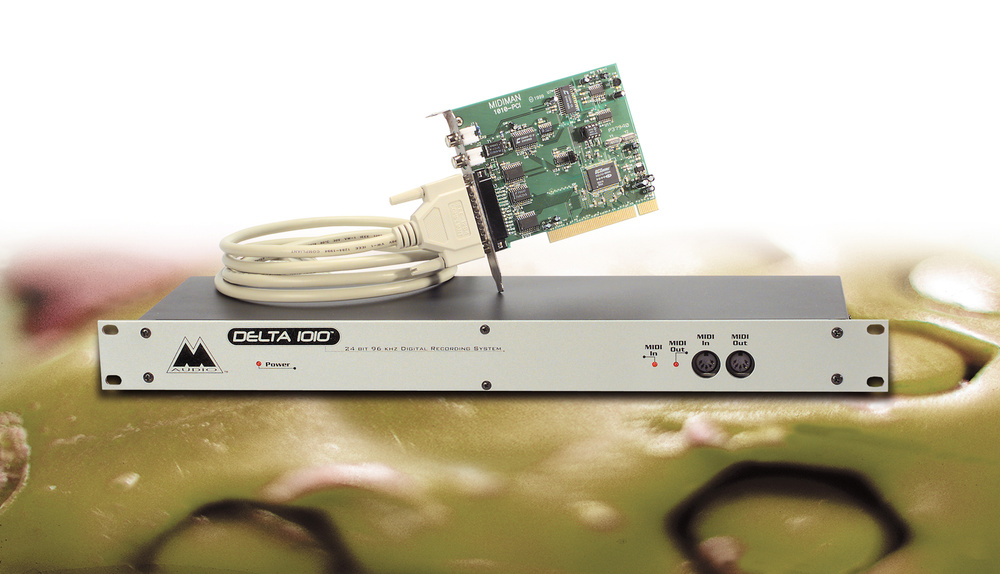
    Probably the m-audio delta 1010

    That doesn’t have a Firewire interface, does it? I thought I had one of those.

    checks

    Oh, I’m thinking of the 1010LT, not the 1010. That lives on a PCI card.


  • If it’s Linux, sounds like it should just work out of box, at least for a while longer.

    https://www.tomshardware.com/news/linux-to-support-firewire-until-2029

    Linux to Support Firewire Until 2029

    The ancient connectivity standard still has years of life ahead of it.

    Firewire is getting a new lease on life and will have extended support up to 2029 on Linux operating systems. Phoronix reports that a Linux maintainer Takashi Sakamoto has volunteered to oversee the Firewire subsystem for Linux during this time, and will work on Firewire’s core functions and sound drivers for the remaining few that still use the connectivity standard.

    Further, Takashi Sakamoto says that his work will help users transition from Firewire to more modern technology standards (like perhaps USB 2.0). Apparently, Firewire still has a dedicated fanbase that is big enough to warrant six more years of support. But we suspect this will be the final stretch for Firewire support, surrounding Linux operating systems. Once 2029 comes around, there’s a good chance Firewire will finally be dropped from the Linux kernel altogether.


  • I mean, I’m listing it because I believe that it’s something that has some value that could be done with the information. But it’s a “are the benefits worth the costs” thing? let’s say that you need to pay $800 and wear a specific set of glasses everywhere. Gotta maintain a charge on them. And while they’re maybe discrete compared to a smartphone, I assume that people in a role where they’re prominent (diplomacy, business deal-cutting, etc) probably know what they look like and do, so I imagine that any relationship-building that might come from showing that you can remember someone’s name and personal details (“how are Margaret and the kids?”) would likely be somewhat undermined if they know that you’re walking around with the equivalent of your Rolodex in front of your eyeballs. Plus, some people might not like others running around with recording gear (especially in some of the roles listed).

    I’m sure that there are a nonzero number of people who would wear them, but I’m hesitant to believe that as they exist today, they’d be a major success.

    I think that some of the people who are building some of these things grew up with Snow Crash and it was an influence on them. Google went out and made Google Earth; Snow Crash had a piece of software called Earth that did more-or-less the same thing (albeit with more layers and data sources than Google Earth does today). Snow Crash had the Metaverse with VR goggles and such; Zuckerberg very badly wanted to make it real, and made a VR world and VR hardware and called it the Metaverse. Snow Crash predicts people wearing augmented reality gear, but also talks about some of the social issues inherent with doing so; it didn’t expect everyone to start running around with them:

    Someone in this overpass, somewhere, is bouncing a laser beam off Hiro’s face. It’s annoying. Without being too obvious about it, he changes his course slightly, wanders over to a point downwind of a trash fire that’s burning in a steel drum. Now he’s standing in the middle of a plume of diluted smoke that he can smell but can’t quite see.

    It’s a gargoyle, standing in the dimness next to a shanty. Just in case he’s not already conspicuous enough, he’s wearing a suit. Hiro starts walking toward him. Gargoyles represent the embarrassing side of the Central Intelligence Corporation. Instead of using laptops, they wear their computers on their bodies, broken up into separate modules that hang on the waist, on the back, on the headset. They serve as human surveillance devices, recording everything that happens around them. Nothing looks stupider, these getups are the modern-day equivalent of the slide-rule scabbard or the calculator pouch on the belt, marking the user as belonging to a class that is at once above and far below human society. They are a boon to Hiro because they embody the worst stereotype of the CIC stringer. They draw all of the attention. The payoff for this self-imposed ostracism is that you can be in the Metaverse all the time, and gather intelligence all the time.

    The CIC brass can’t stand these guys because they upload staggering quantities of useless information to the database, on the off chance that some of it will eventually be useful. It’s like writing down the license number of every car you see on your way to work each morning, just in case one of them will be involved in a hit-and-run accident. Even the CIC database can only hold so much garbage. So, usually, these habitual gargoyles get kicked out of CIC before too long.

    This guy hasn’t been kicked out yet. And to judge from the quality of his equipment – which is very expensive – he’s been at it for a while. So he must be pretty good.

    If so, what’s he doing hanging around this place?

    “Hiro Protagonist,” the gargoyle says as Hiro finally tracks him down in the darkness beside a shanty. “CIC stringer for eleven months. Specializing in the Industry. Former hacker, security guard, pizza deliverer, concert promoter.” He sort of mumbles it, not wanting Hiro to waste his time reciting a bunch of known facts.

    The laser that kept jabbing Hiro in the eye was shot out of this guy’s computer, from a peripheral device that sits above his goggles in the middle of his forehead. A long-range retinal scanner. If you turn toward him with your eyes open, the laser shoots out, penetrates your iris, tenderest of sphincters, and scans your retina. The results are shot back to CIC, which has a database of several tens of millions of scanned retinas. Within a few seconds, if you’re in the database already, the owner finds out who you are. If you’re not already in the database, well, you are now.

    Of course, the user has to have access privileges. And once he gets your identity, he has to have more access privileges to find out personal information about you. This guy, apparently, has a lot of access privileges. A lot more than Hiro.

    “Name’s Lagos,” the gargoyle says.

    So this is the guy. Hiro considers asking him what the hell he’s doing here. He’d love to take him out for a drink, talk to him about how the Librarian was coded. But he’s pissed off. Lagos is being rude to him (gargoyles are rude by definition).

    “You here on the Raven thing? Or just that fuzz-grunge tip you’ve been working on for the last, uh, thirty-six days approximately?” Lagos says.

    Gargoyles are no fun to talk to. They never finish a sentence. They are adrift in a laser-drawn world, scanning retinas in all directions, doing background checks on everyone within a thousand yards, seeing everything in visual light, infrared, millimeter wave radar, and ultrasound all at once. You think they’re talking to you, but they’re actually poring over the credit record of some stranger on the other side of the room, or identifying the make and model of airplanes flying overhead. For all he knows, Lagos is standing there measuring the length of Hiro’s cock through his trousers while they pretend to make conversation.

    I think that Stephenson probably did a reasonable job there of highlighting some of the likely social issues that come with having wearable computers with always-active sensors running.


  • tal@olio.cafeto3DPrinting@lemmy.worldExplain that
    link
    fedilink
    English
    arrow-up
    16
    ·
    edit-2
    7 months ago

    kagis

    It does sound like there are people who have been working on synthesizing spider silk for some time. So maybe we’ll get there in our lifetimes.

    https://old.reddit.com/r/askscience/comments/qiy6x/what_is_keeping_us_from_making_synthetic_spider/

    What is keeping us from making synthetic spider silk?

    Hey, I can tackle this one because I work in a lab where we ARE making synthetic spider silk.

    First off, the collection of natural silk or the farming of spiders is difficult on a large scale. This is due to spiders being cannibalistic and territorial. So what we’ve done is create transgenic organisms that create the spider silk proteins for us. These organisms include goats, silkworms, bacteria and alfalfa.

    Problems still exist overall. For example, for every organism, except silkworms, we must spin the protein fibers ourselves. This is the current bottleneck in the production line. After the long process of protein purification, the proteins are dissolved in an organic solvent, and pushed through a long thin needle into an alcohol coagulation bath. The fibers are then treated by different methods to try to increase the strength further. Currently, we can take 1 gallon of goats milk and purify between 1 and 10 grams of protein. From 1 gram of protein we an spin hundreds of meters of silk. The silk is not as strong as the native silk, but stronger than Kevlar and silkworm silk. We are currently working on optimizing this procedure, as well as up-scaling it.

    The other promising organism is the transgenic silkworms. The benefit of the silkworms is they spin the fibers for us. The most recent data show that a fiber containing 5% spider silk proteins increase the strength of the silkworm silk by 50%. If we can increase the amount of protein in the silkworms, it may be the most promising way to produce large amounts of silk, due to the infrastructure for silk manufacturing already existing for silkworm cocoons.

    Currently, I am working on a couple of projects. One is mixing different ratios of silkworm silk and spider silk (created from bacteria), and finding the changes in mechanical strengths. It is unlikely we can go much higher than 20% spider silk proteins with out competently knocking out the silkworm genes altogether (which may be a future project). Another project I am working on is trying to create a human ACL from transgenic silkworm silk/spider silk fibers. We will be cabling and braiding the fibers in different way to find the best method of creating ligaments.

    So, in closing, we are making synthetic silks; however, only in the lab. Once the technology is optimized, it will be moved into industry and many different applications may come from it.

    https://www.science.org/content/article/black-widows-spin-super-silk

    The silk of the humble spider has some pretty impressive properties. It’s one of the sturdiest materials found in nature, stronger than steel and tougher than Kevlar. It can be stretched several times its length before it breaks. For these reasons, replicating spider silk in the lab has been a bit of an obsession among materials scientists for decades.

    Now, researchers at the University of Cambridge have created a new material that mimics spider silk’s strength, stretchiness and energy-absorbing capacity. This material offers the possibility of improving on products from bike helmets to parachutes to bulletproof jackets to airplane wings. Perhaps its most impressive property? It’s 98 percent water.

    “Spiders are interesting models because they are able to produce these superb silk fibers at room temperature using water as a solvent,” says Darshil Shah, an engineer at Cambridge’s Centre for Natural Material Innovation. “This process spiders have evolved over hundreds of millions of years, but we have been unable to copy so far.”

    The lab-made fibers are created from a material called a hydrogel, which is 98 percent water and 2 percent silica and cellulose, the latter two held together by cucurbiturils, molecules that serve as “handcuffs.” The silica and cellulose fibers can be pulled from the hydrogel. After 30 seconds or so, the water evaporates, leaving behind only the strong, stretchy thread.

    The fibers are extremely strong – though not quite as strong as the strongest spider silks – and, significantly, they can be made at room temperature without chemical solvents. This means that if they can be produced at scale, they have an advantage over other synthetic fibers such as nylon, which require extremely high temperatures for spinning, making textile production one of the world’s dirtiest industries. The artificial spider silk is also completely biodegradable. And since it’s made from common, easily accessible materials – mainly water, silica and cellulose – it has the potential to be affordable.

    Shah and his team are far from the only scientists to work on creating artificial spider silk. Unlike silkworms, which can be farmed for their silk, spiders are cannibals who wouldn’t tolerate the close quarters necessary for farming, so turning to the lab is the only way to get significant quantities of the material. Every few years brings headlines about new inroads in the process. A German team has modified E-coli bacteria to produce spider silk molecules. Scientists at Utah State University bred genetically modified “spider goats” to produce silk proteins in their milk. The US army is testing “dragon silk” produced via modified silkworms for use in bulletproof vests. Earlier this year, researchers at the Karolinska Institute in Sweden published a paper on a new method for using bacteria to produce spider silk proteins in a potentially sustainable, scalable way. And this spring, California-based startup Bolt Threads debuted bioengineered spider silk neckties at the SXSW festival. Their product is made through a yeast fermentation process that produces silk proteins, which then go through an extrusion process to become fibers. It’s promising enough to have generated a partnership with outdoor manufacturer Patagonia.

    But, as a 2015 Wired story points out, “so far, every group that’s attempted to produce enough of the stuff to bring it to the mass market, from researchers to giant corporations, has pretty much failed.”


  • tal@olio.cafeto3DPrinting@lemmy.worldExplain that
    link
    fedilink
    English
    arrow-up
    18
    ·
    edit-2
    7 months ago

    considers

    I think that with thermoplastic, the problem is that you’re extruding a liquid that hardens as it cools. Unless you have very good information about the particular filament used, a very good model of how it acts as it cools, good control over airflow, and good control over (or at least sensors to get a very good awareness of) environmental temperature, you’re going to have a hard time extruding something at precisely the right rate such that it cools into exactly the shape you want. Also, you’re facing the constraint of keeping the thermoplastic in the extruder at the right fluidity. Maybe you could…have the filament be melted, then enter some kind of heated pump…that’d help decouple the rate at which you need to extrude from the temperature at which you want to have the already-extruded material.

    In theory, it’s possible to move a 3D printer’s extruder and extrude at just the right rate such that you could run a line from point A to point B without regard for support. But in practice, I think that current thermoplastic printers would have a long way to go before they could reliably do that.

    That being said…

    A printer that could print in spider silk — or a printer that could print in multiple materials, including spider silk — might have some neat applications.

    https://www.science.org/content/article/black-widows-spin-super-silk

    Need a strong elastic fiber? Try black widow silk. The thread spun by these deadly spiders is several times as strong as any other known spider silk–making it about as durable as Kevlar, a synthetic fiber used in bulletproof vests, according to a report presented here at the annual meeting of the Society for Integrative and Comparative Biology.

    I mean, I’d kind of imagine that you could maybe even use that in some sort of composite, to strengthen other printed things in various ways.

    Now I kind of want a black widow spider silk 3D printer.